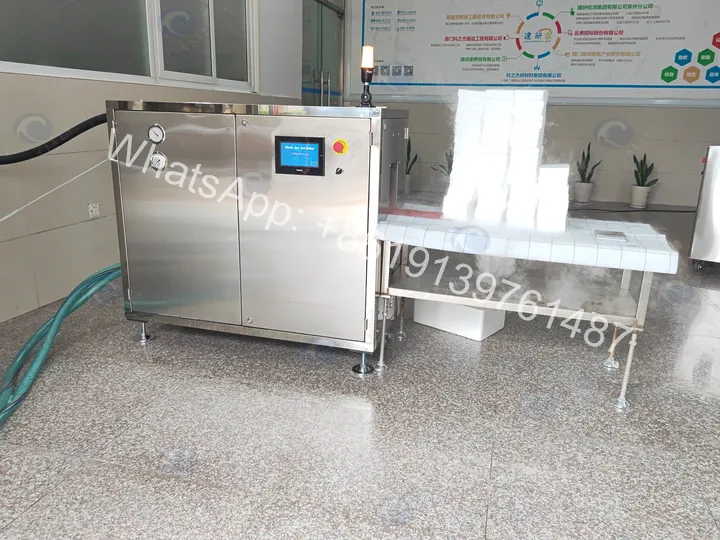
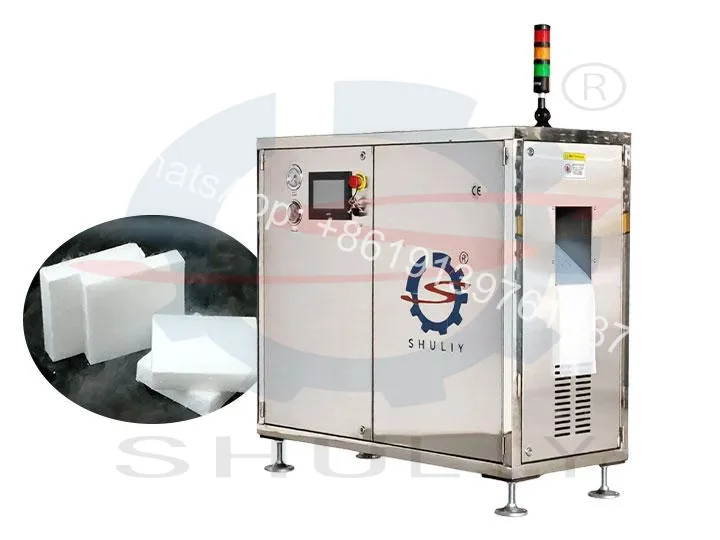
Dry Ice Block Machine
| Marca | Maquinaria Shuliy |
| Modelo | SL Series |
| Machine Type | Hydraulic Dry Ice Block Press |
| Production Capacity | 120–300 kg/h |
| Block Size | 125 × 105 × 15–70 mm; 210 × 125 × 20–70 mm |
| Block Thickness | Adjustable |
| Dry Ice Density | 1,450–1,550 kg/m³ |
| Liquid-to-Solid CO₂ Conversion Ratio | ≥42% |
| Poder total | 4–8 kW |
| Machine Weight | 320–800 kg |
| Machine Dimensions | 125 × 60 × 128 cm to 143 × 66 × 158 cm |
| Warranty Period | 12 months |
| Certification | ISO9001, CE |
Ahora puede solicitar detalles técnicos a nuestros jefes de proyecto
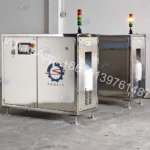
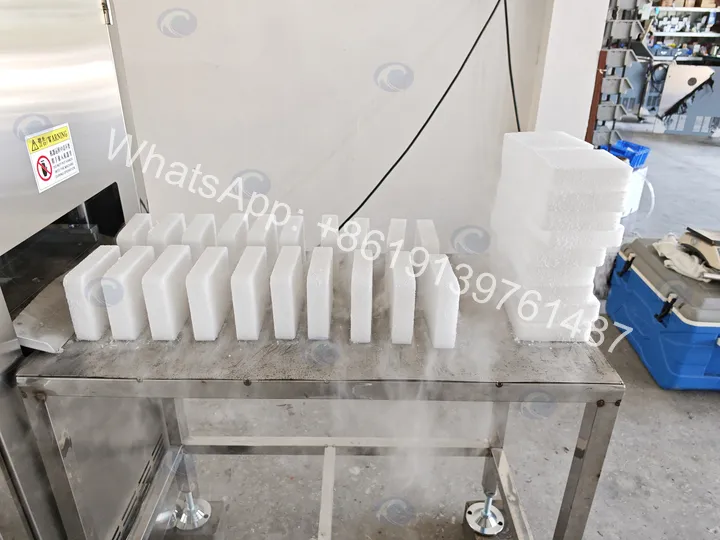
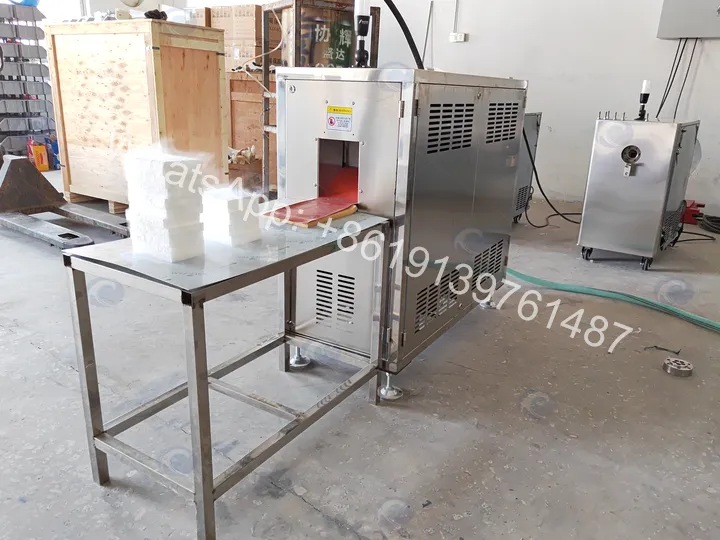
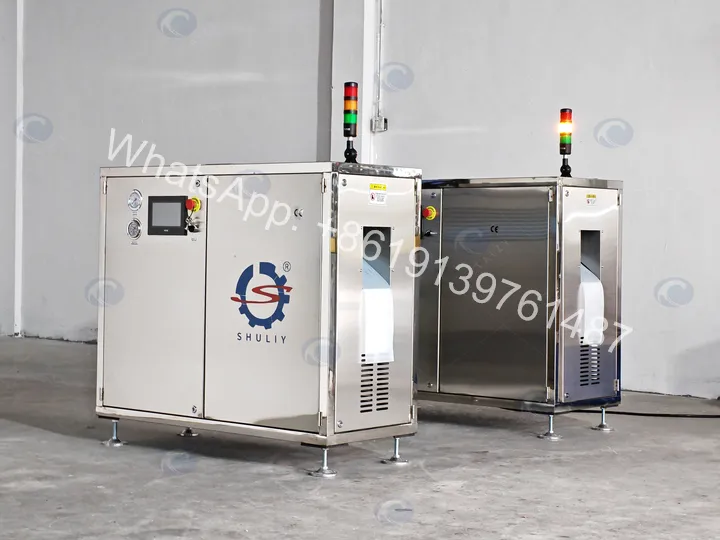
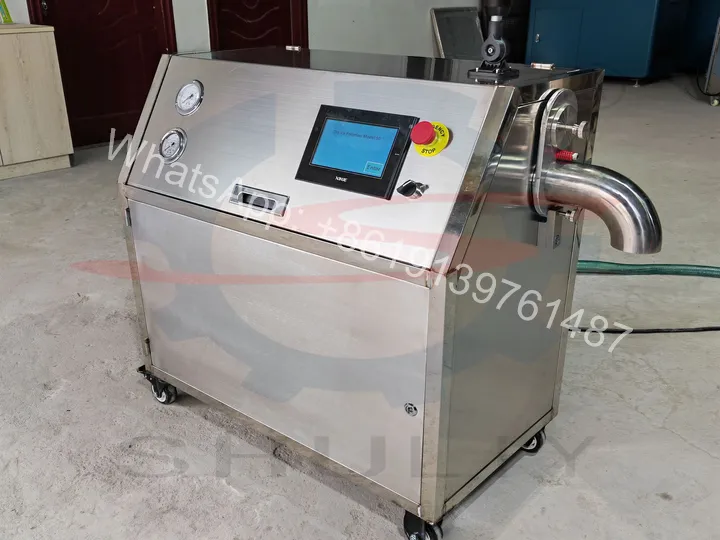
A dry ice block machine is a hydraulic press system designed to convert liquid CO2 into dense, solid dry ice blocks. Shuliy offers three models with capacities from 120 to 300 kg per hour. The finished blocks measure 125×105 mm or 210×125 mm, with adjustable thickness from 15 to 70 mm. They are widely used for cold chain transport, food preservation, fog effects, and laboratory cooling.
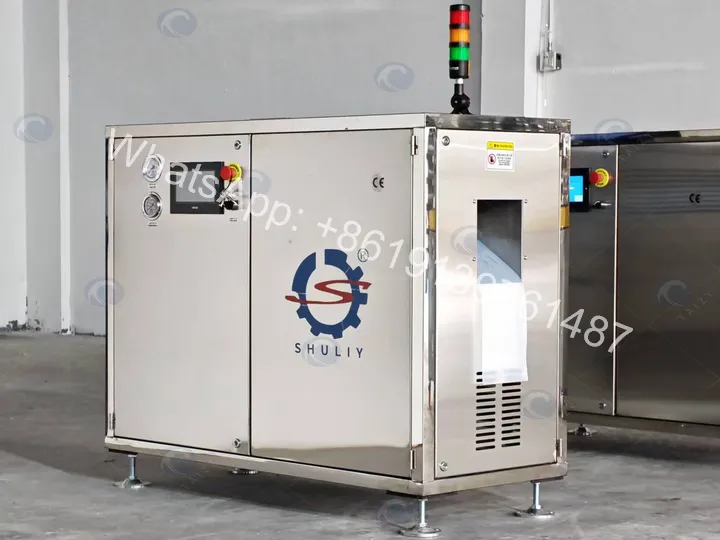
Compared with dry ice pellets, blocks sublimate much more slowly thanks to their lower surface-area-to-volume ratio. Our dry ice block making machine produces blocks with a density of 1,450–1,550 kg/m³. The liquid-to-solid CO2 conversion ratio reaches 42% or higher. One-button automatic start completes the full production cycle, cutting labor and production costs significantly.
Shuliy Machinery has over 20 years of experience in refrigeration and CO2 processing equipment. Our machines run in more than 50 countries. Every unit is factory-tested before shipment and backed by lifetime technical support.
Technical Specifications of the Dry Ice Block Machine
| Artículo | SL-120 | SL-240 | SL-300 |
|---|---|---|---|
| Capacidad | 120–180 kg/h | 200–300 kg/h | 200–300 kg/h |
| Block size | 125×105×(15–70) mm | 125×105×(18–70) mm | 210×125×(20–70) mm |
| Thickness | Adjustable | Adjustable | Adjustable |
| Dry ice density | 1,550 kg/m³ | 1,450–1,550 kg/m³ | 1,450–1,550 kg/m³ |
| Liquid-to-solid CO2 conversion ratio | ≥42% | ≥42% | ≥42% |
| Poder total | 4 kW | 8 kW | 5 kW |
| Machine weight | 320 kg | 800 kg | 720 kg |
| Dimensions | 125×60×128 cm | 142×120×148 cm | 143×66×158 cm |
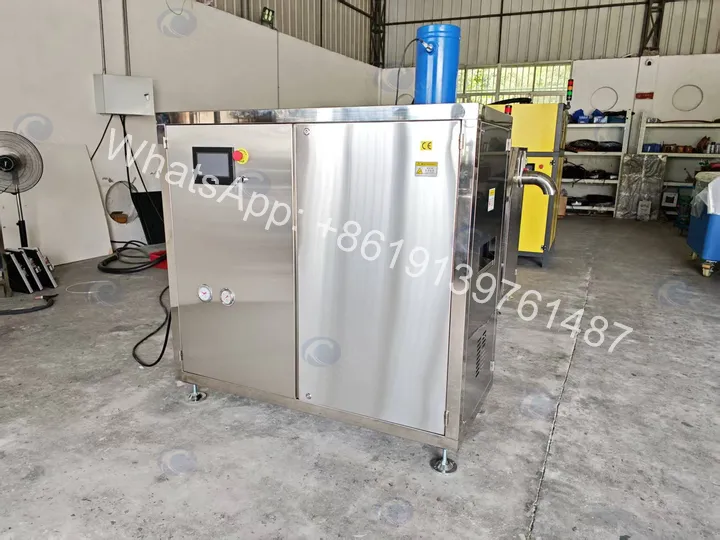
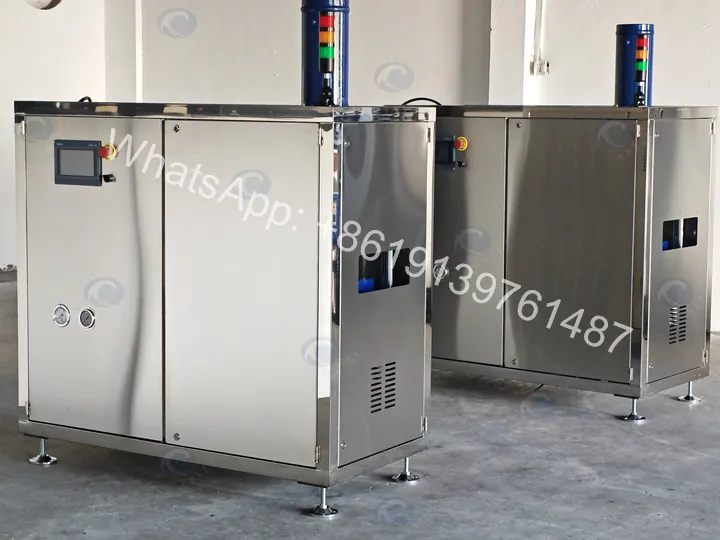
SL-120 Dry Ice Block Machine for Entry-Level Commercial Production
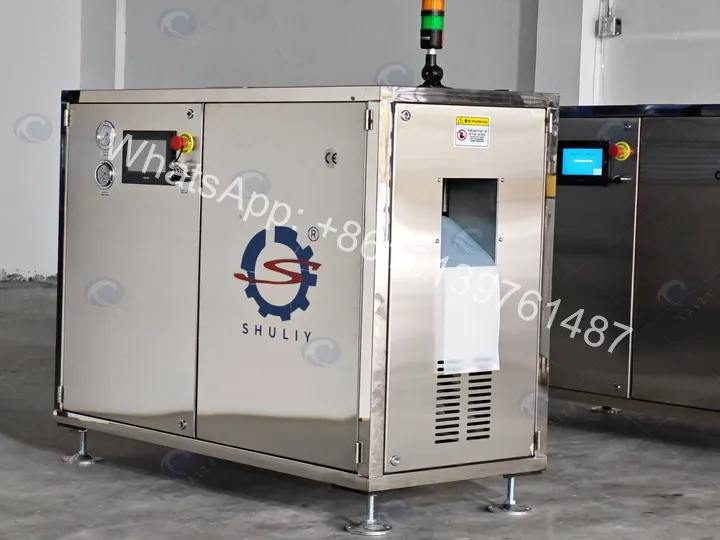
The SL-120 is the most compact dry ice block machine in the series. It produces 120–180 kg of dry ice blocks per hour with only 4 kW of power. The whole machine weighs 320 kg and occupies less than 1 square meter of floor space.
This model suits small cold chain companies, seafood processors, and event service providers. Block thickness adjusts between 15 and 70 mm, so one machine covers different cooling durations. The low investment threshold makes it a practical first step into dry ice block production.
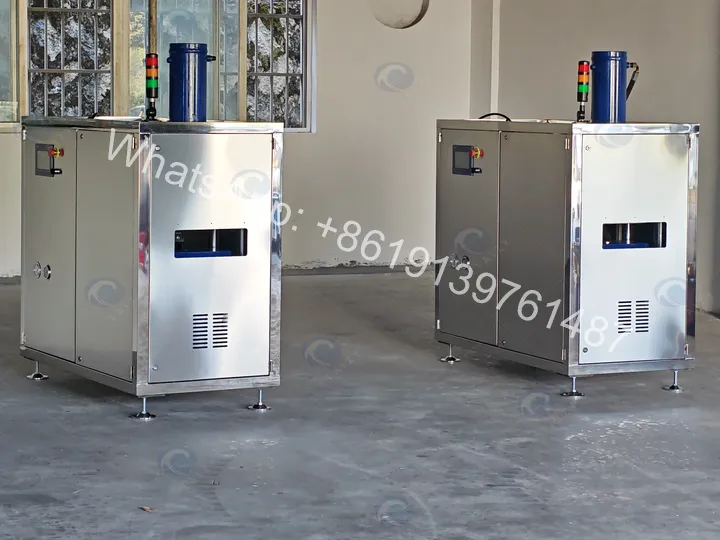
SL-240 High-Capacity Dry Ice Block Maker for Industrial Users
The SL-240 is built for continuous industrial output. It delivers 200–300 kg per hour through an 8 kW drive system. Blocks keep the standard 125×105 mm face with adjustable thickness from 18 to 70 mm.
The fully enclosed design keeps the compression chamber isolated from the workshop air. This dry ice block maker starts producing usable ice immediately after startup, with no snow-spray waste at the outlet. For food logistics hubs and dry ice distributors running daily batches, this model balances capacity and energy use.
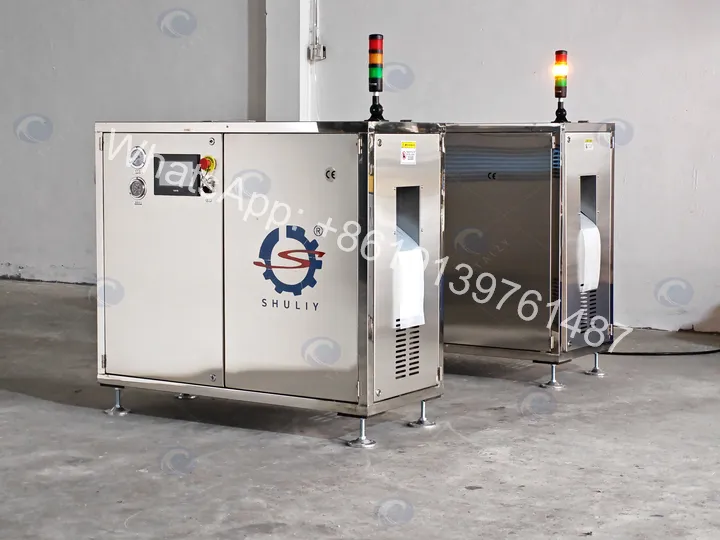
SL-300 One-Step Forming Dry Ice Block Press Machine
The SL-300 is a one-step forming dry ice block press machine. It compresses CO2 snow into a finished 210×125 mm block in a single pressing cycle. No secondary shaping is needed. Output stays at 200–300 kg per hour with only 5 kW of total power.
The larger block format suits long-distance cold chain shipping and airline catering, where slow sublimation matters most. At 720 kg and 143×66×158 cm, the machine fits standard container loading for export orders. High machining precision, an advanced control system, and accurate measurement sensors keep every block consistent in weight and density.
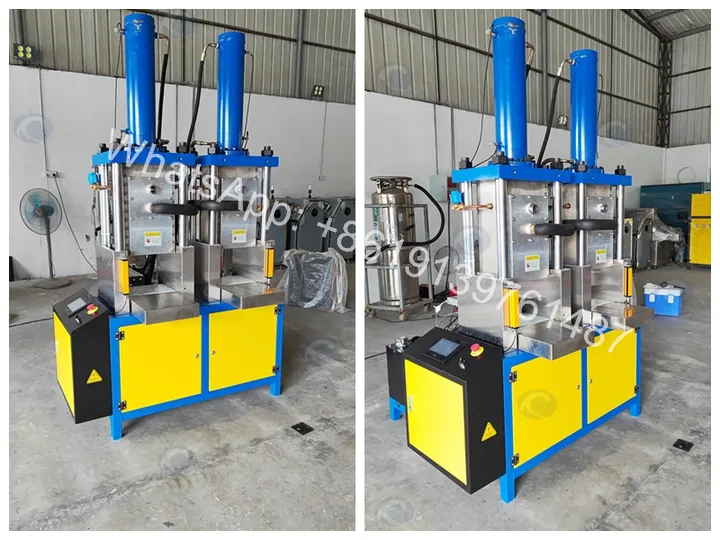
How Does a Dry Ice Block Making Machine Work?
The production process is fully automatic and takes only a few stages:
- Liquid CO2 feeding. Liquid CO2 from a low-temperature storage tank enters the machine through an insulated inlet line.
- Expansion and snow formation. Pressure release turns part of the liquid CO2 into fine dry ice snow inside the sealed chamber.
- Hydraulic compression. The press cylinder compacts the snow into a dense block at 1,450–1,550 kg/m³.
- Demolding and discharge. The finished block is pushed out automatically. Thickness is set on the control panel between 15 and 70 mm.
- Cycle repeat. The system resets and starts the next cycle, producing blocks continuously at up to 300 kg per hour.
The conversion ratio of liquid to solid CO2 stays at 42% or higher throughout the cycle. This is a key economic figure: every 100 kg of liquid CO2 yields at least 42 kg of saleable dry ice blocks.
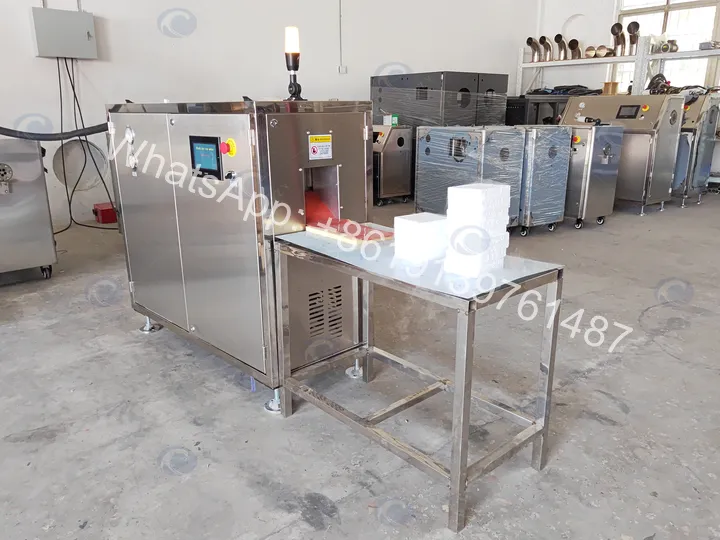
Key Advantages of Shuliy Dry Ice Block Maker
- Fully enclosed, safe design. The sealed structure prevents cold burns and CO2 exposure during operation. A built-in safety alarm and monitoring system watches pressure and temperature in real time.
- 304 stainless steel body. All contact parts use 304 stainless steel. This prevents rust caused by CO2 gas corrosion and meets food-grade hygiene requirements.
- Energy-saving performance. The SL-300 produces 200–300 kg/h with only 5 kW. High-precision manufacturing reduces internal leakage and wasted CO2.
- Clean startup. The machine releases no snow spray when it starts. Dry ice comes out directly, so material loss during startup is close to zero.
- One-button automation. A single start button runs the complete cycle: feeding, compression, demolding, and discharge. One operator can manage the machine with minimal training.
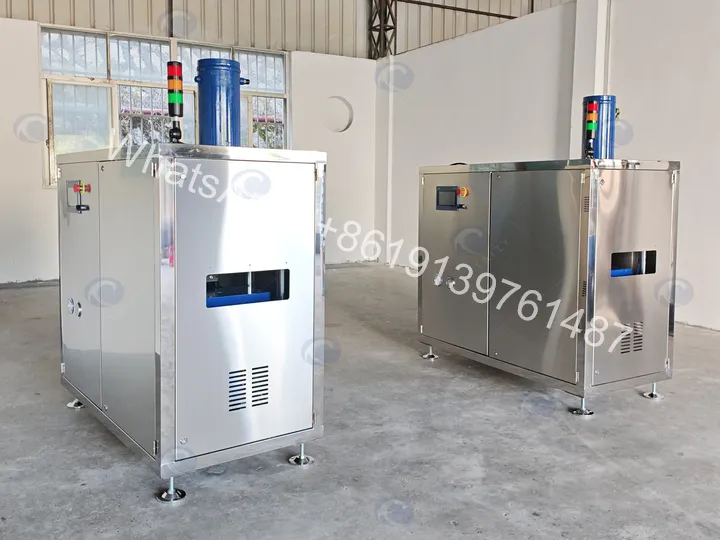
Where Are Dry Ice Blocks Used?
Dry ice blocks from a dry ice block machine serve industries that need long-lasting, residue-free cooling:
- Cold chain transport. Blocks keep frozen food, seafood, and pharmaceuticals at −78.5°C during long-distance shipping. High density means slower sublimation and longer cooling time.
- Low-temperature food preservation. Supermarkets and food processors use blocks for display cabinets and temporary cold storage during power outages.
- Fog and smoke effects. The entertainment industry uses dry ice blocks for stage fog in concerts, theaters, and film production.
- Laboratories and medical facilities. Blocks provide stable ultra-low temperatures for sample storage, vaccine transport, and research cooling.
Common Production Pain Points and Our Solutions
- Pellets sublimate too fast for long shipping. Pellets have a large surface area and lose mass quickly. Blocks at 1,550 kg/m³ density sublimate far more slowly. They are the right format for shipments lasting more than 24 hours.
- CO2 waste cuts into margins. Low-end machines waste liquid CO2 during startup and conversion. Our 42%+ conversion ratio and no-spray startup recover more saleable product from every tank.
- Safety risks in manual operation. Direct contact with −78.5°C surfaces causes severe cold burns. The enclosed chamber and automatic discharge remove the operator from the forming zone entirely.
- Inconsistent block quality. Blocks with uneven density crack during handling. High-precision measurement and PLC control keep every block within a tight weight and density range.
Why Choose Shuliy as Your Dry Ice Block Machine Supplier?
Shuliy Machinery holds ISO and CE certifications and exports CO2 processing equipment to over 50 countries. Each machine ships with a full English manual, wiring diagrams, and spare parts list.
Our after-sales policy includes a 1-year warranty, lifetime technical support, and a multilingual service team. Engineers provide remote video guidance for installation and commissioning. Tell us your daily output target, and we will match you with the right model within 24 hours.
Frequently Asked Questions About Dry Ice Block Machine
What liquid CO2 supply do I need to run the machine?
You need a low-temperature liquid CO2 storage tank or Dewar with a working pressure of about 2.0–2.2 MPa. The tank connects to the machine through an insulated hose. Most industrial gas suppliers can install and refill the tank on a contract basis.
How long do dry ice blocks last in storage?
In a well-insulated container, blocks lose roughly 3–8% of mass per day through sublimation. Higher-density blocks (1,550 kg/m³) sit at the lower end of that range. Use thick insulated boxes and minimize empty space to slow the loss.
Can I adjust block thickness for different customers?
Yes. Thickness is set directly on the control panel. The SL-120 covers 15–70 mm, the SL-240 covers 18–70 mm, and the SL-300 covers 20–70 mm. No mold change is needed for thickness adjustment within the range.
Can the machine run on my local voltage?
The standard configuration is 3-phase 380 V, 50 Hz. We customize motors and control cabinets for 220 V, 415 V, 440 V, or 60 Hz grids. Confirm your local supply before ordering, and we will match the electrical system at the factory.
What daily maintenance does the machine require?
Wipe down contact surfaces after each shift and check the inlet filter weekly. Inspect seals and hydraulic oil monthly. The 304 stainless steel body needs no anti-rust treatment. Full maintenance steps are listed in the English manual.
Related Products You May Also Need
- Dry Ice Pelletizer Machine – produces 3 mm and 16 mm pellets for dry ice blasting and precision cleaning
Get a Free Quote for Your Dry Ice Block Machine
Tell us your target daily output, block size, and local voltage. Our engineers will recommend the most suitable dry ice block machine model and send a detailed quotation within 24 hours. Contact Shuliy today to start your dry ice production business.